

If you look up at your roof, you probably see some green or grey patches. Most people call it all “moss,” but that is rarely the case. In our part of Bournemouth, Dorset, the salty sea air and constant damp create a bit of a cocktail of different growths.
If you can tell the difference between them, you will understand why some cleaning jobs last years and others fail after six months.
Biofilm
Before the green stuff appears, there is something called biofilm. You can’t see it easily, but it is a thin, sticky layer of bacteria that coats your tiles. Think of it as the glue. It creates a surface that algae, moss, and lichen can actually grip.
If a roof cleaner comes along and removes the visible moss but leaves that biofilm behind, the growth comes back almost immediately. That is why a proper clean is about breaking down that invisible layer, not just scraping the surface.
How Your Roof Gets Ruined
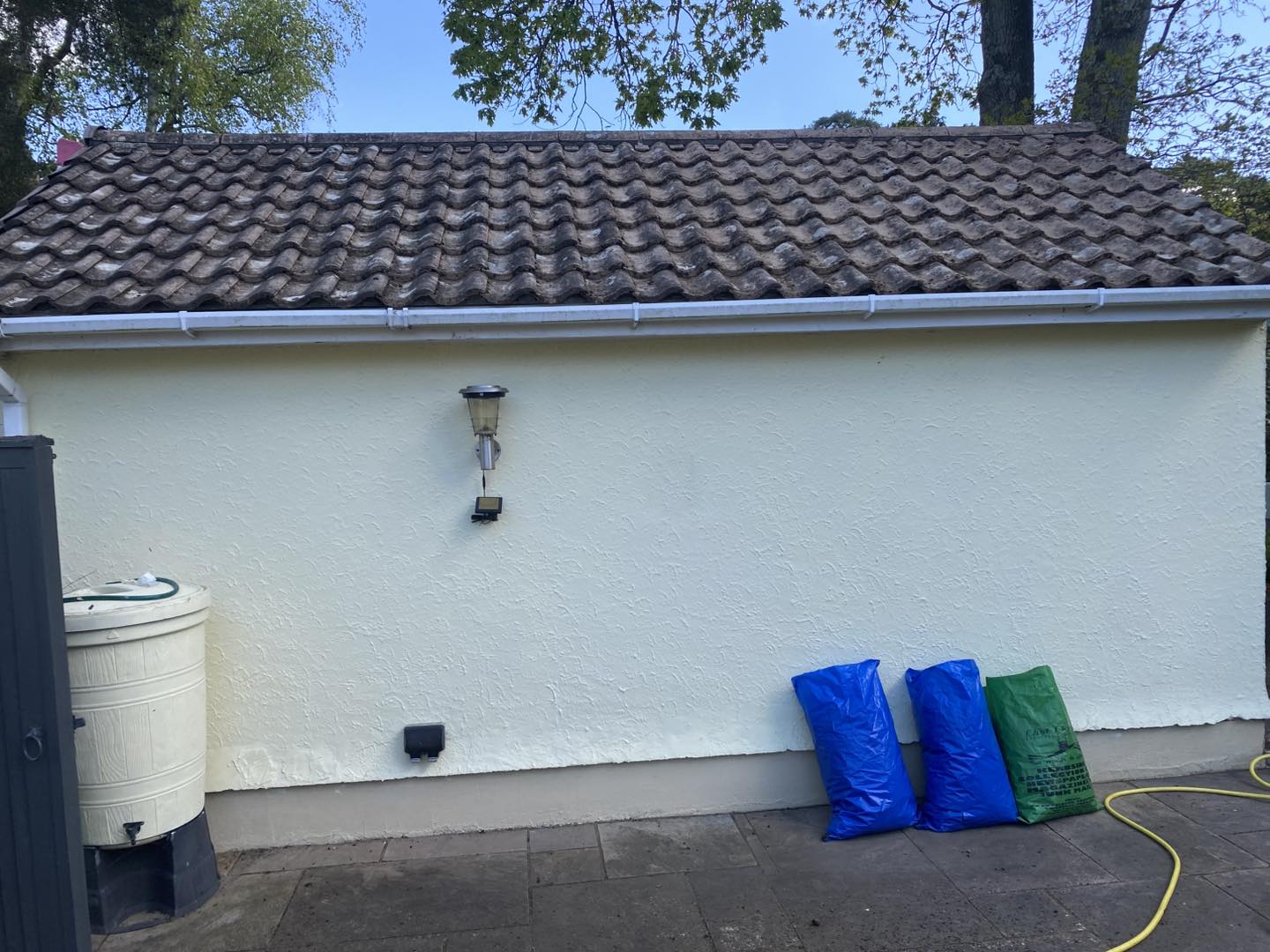
On many roofs, the damage happens in a sequence. It often starts with biofilm, followed by algae streaks. Once the algae has made the tile damp and porous, moss finds a place to anchor itself.
However, nature does not always follow a script. Some roofs skip the green phase entirely. If a roof is very exposed to the sun or wind, moss might struggle to grow, but lichen will move in and take over. This is why you will often see roofs covered in white or grey spots without a single clump of green moss.
Regardless of the order, the result is the same. The longer you leave these organisms alone, the deeper they root and the harder they are to remove.
How to identify what is actually living on your roof.
Algae (The Green Streaks)
Algae usually appear as green or black streaks, often running down from the ridge or settling in the dips of the tiles. It is the first stage of growth.
Algae is relatively thin and does not have deep roots. However, it holds moisture against the tile. In our coastal climate, algae spreads quickly because of the high humidity. If left alone, it prepares the roof for the heavier growth to follow.
Moss (The Green Carpets)
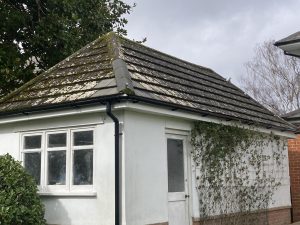
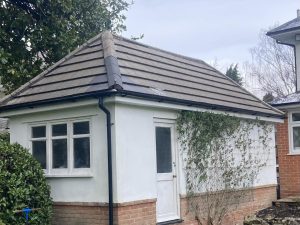
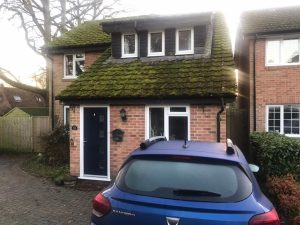
Moss is what most people notice first. It looks like thick, plush green carpets or clumps. Unlike algae, moss has a root-like structure that anchors itself into the pores of your tiles.
Moss is dangerous for two reasons.
- It acts like a sponge, soaking up rainwater and holding it against your roof. This leads to dampness and can cause tiles to crack during a frost.
- It blocks your gutters, which leads to overflows and damp walls.
Lichen (The Crusty Spots)
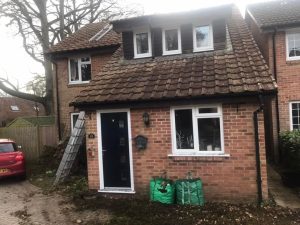
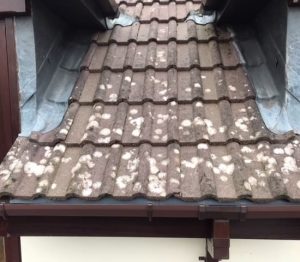
Lichen is the hardest to deal with. It looks like crusty, circular patches of grey, white, or bright orange. If you try to scrape it off, you will find it is fused to the tile.
Lichen produces acids that actually eat into the surface of the tile to stay attached. This is why lichen removal requires specific chemical treatments. You cannot simply brush it away without risking damage to the tile surface.
Why the Bournemouth Climate Makes it Worse
Our location in Dorset plays a huge role. The sea air brings moisture and salt, which creates a constant damp environment. North-facing roofs in Bournemouth are particularly prone to this because they get less sunlight to dry them out.
When you combine the coastal damp with the biofilm layer, your roof becomes a breeding ground. What starts as a few streaks of algae can turn into heavy moss and stubborn lichen within a few short years. You can read more about how Bournemouth’s coastal air affects external surfaces.
Why the Difference Matters for Your Wallet
Knowing what is on your roof changes how it should be cleaned.
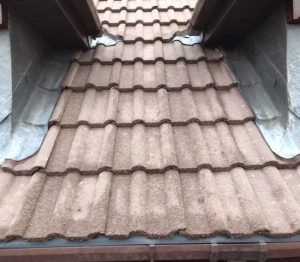
If you have only algae, a light softwash is often enough. If you have heavy moss, you need a manual scrape to remove the bulk before treating the roots. If you have lichen, you need a specialist biocide that can break that chemical bond between the lichen and the tile.
The biggest mistake I see is people hiring a cleaner who treats every roof the same. If they use a high-pressure washer on lichen, they often end up pitting the tiles, which makes the roof even more porous. This creates more holes for the biofilm to settle into, and the moss returns even faster than before.
How I Handle These Organisms
I have been dealing with the Dorset climate since 2013. I do not guess what is on your roof. I identify the growth first, then choose the method.
- For Algae: I use a targeted softwash to kill the organism and clear the biofilm.
- For Moss: I use a combination of manual removal and biocide to ensure the roots are dead.
- For Lichen: I use professional-grade treatments designed to lift the crust without harming the tile.

Is Your Roof at Risk?
If you see orange spots, green carpets, or dark streaks, the biological process has already begun. The longer these organisms stay on your roof, the more they damage the material.
I can tell you exactly what is growing on your home and the best way to get rid of it for good.
Call Martin today for a proper assessment: 07443-490533
If you prefer, you can fill out the contact form, and I will get back to you shortly to discuss how we can protect your roof.


